Easy to Make Homemade Hot Chocolate

Today we are doing something a little bit different.

This will be the first post on the blog which features video! The recipe is a wonderful (and might I say exceptionally indulgent) homemade hot chocolate. Making the drink yourself instead of using the premixed cocoa and milk powders makes such a big difference in flavour.

This recipe makes one cup of cocoa, so be sure to double the ingredients for more servings!

Enjoy the video! The written version of the recipe will be available below.

The Ingredients

  • 30g of plain/dark chocolate, finely chopped
  • 1-2 tbsp of soft light brown sugar, depending on how sweet you like it
  • 1 tbsp of cocoa powder
  • 1 mug/cup of milk, filled mostly to the top

The Method

  1. Heat the milk, sugar, cocoa powder and chocolate in a small pan over a medium heat until steaming and the chocolate has melted. Be sure to whisk every so often to make sure the powder is dissolved.
  2. Pour the cocoa into a mug, you may want to use a ladle for this.
  3. Add your preferred hot chocolate toppings and enjoy!

This simple and easy recipe is sure to warm you up. Be sure to leave feedback on the video if you enjoyed it, thanks for watching!

Shrove Tuesday Easy Pancake Recipe – Medieval Lent

Its Pancake Day! Or Shrove Tuesday, or Mardi Gras. It marks the end of Shrovetide and the beginning of Lent. The purpose of the carnival is to indulge on all of the foods and behaviours which are forbidden throughout the lent period, which is around 40 days.

These deeply Christian celebrations are not personally relevant to me in this modern era. However, my interest focuses on how these events were marked in medieval times when Christianity was arguably at its peak.

It seems that lent was much more intense back then, especially in the many monasteries and cathedrals which civilisation were built around. You can read more about it here!

Some of the basic rules of medieval lent were as follows;

  • Ash Wednesday and Good Friday were total fast days, no food at all
  • No food until 3pm all throughout lent
  • No animal meat or fats
  • No eggs or dairy
  • Fish, wine and beer were allowed however!

Most people observing lent would have eaten bread, vegetables, and salt. Not very varied at all.

But why do we eat pancakes before all of this begins? Well the reason I believe is a pancake is composed of a combination of milk, eggs and fats. Three ingredients that were forbidden over lent AND non preservable for the 40 days, so why not add some flour and use up all your ingredients?

The Ingredients

  • 2 eggs
  • 100g of plain flour
  • 1 tbsp of butter (for the pan)
  • 300ml of milk

The Method

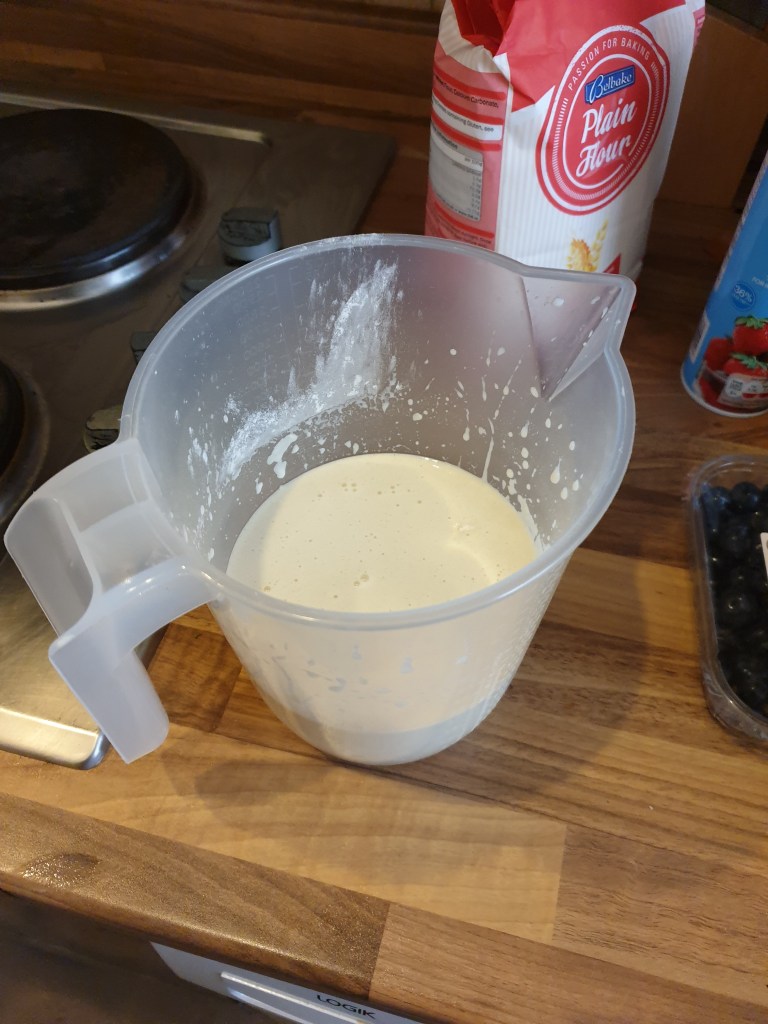
  1. Add the flour, eggs and milk to a mixing bowl and whisk into a smooth batter.
  2. Heat up a frying pan to a medium heat and melt the butter.
  3. Once melted, pour your batter into the pan and cook your pancakes for 1 minute on each side or until golden.
  4. Serve with your preferred toppings

This recipe should make 6 pancakes altogether. Be sure to keep them warm in a low heat oven as you go!

Lentil Mash from Kingdom Come: Deliverance – Medieval Cooking

The Middle Ages are a common setting for a plethora of media. Whether it is film, TV, books or even video games, there is usually always food present.

Kingdom Come: Deliverance by Warhorse Studios is an action role-playing game which prides itself on it’s historically accurate content. The player controls the actions of the son of a blacksmith named Henry after his village is attacked by a rival monarch. Henry has to eat and sleep in order to function at full strength. One of the first and most common meals you come across in the game, is a dish labelled as ‘Lentil Mash’.

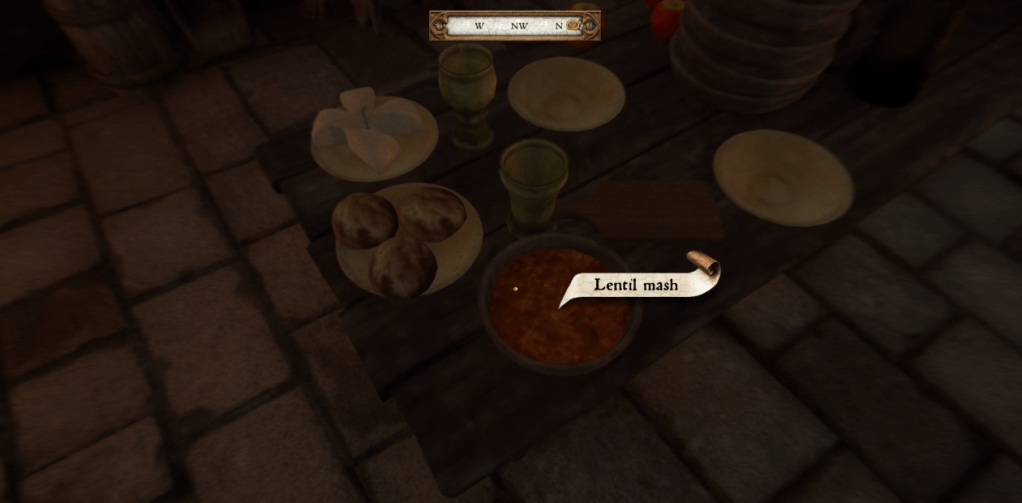
“Lentil mash is a staple of countryside cuisine.”

Screenshot from in-game.

Now I know that the image isn’t great, but the game offers no description of the dish so that and the name is all we have to go on.

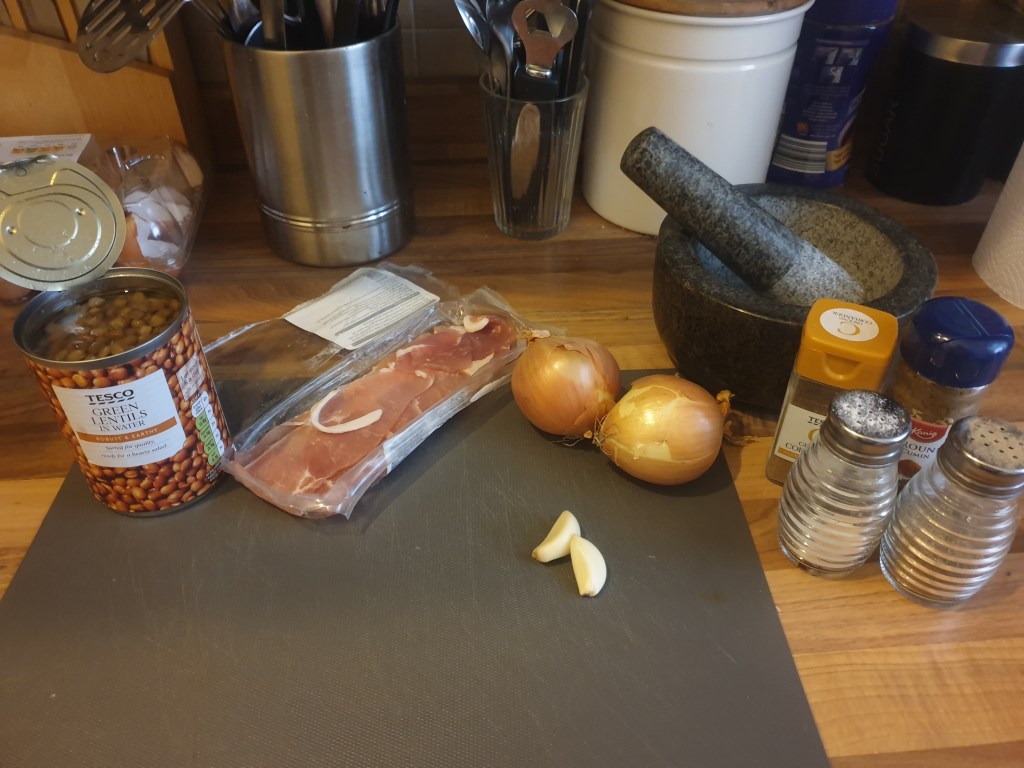
Meat was usually expensive however I have some bacon which needs to be used, so that is going in. Households would often keep a pig throughout the year and slaughter it for use through winter. Let’s pretend this is the case!

The ingredients!

The Ingredients

  • 1 can of green lentils, drained
  • Your desired amount of bacon
  • 2 cloves of garlic, chopped
  • 1 medium onion, chopped
  • Sprinkle of salt and pepper
  • 1tsp of butter
  • 1tsp of ground coriander
  • 1tsp of ground cumin

The Method

  1. Drain your lentils while melting butter in a saucepan, add the chopped onion and bacon for 5 minutes
  2. Add in the chopped garlic and spices, stir and cook for an additional 5 minutes
  3. Add in the lentils and stir everything together, season with salt and pepper to taste
  4. Continue cooking until bacon is fully cooked, then use a potato masher or your spoon to mash
  5. Serve with bread!
The finished meal.

So…this definitely feels medieval, the flavours were great but the texture was a little bit uncomfortable. If you follow this recipe then I recommend cutting the onion much finer than I did.

After a bit of research, a YouTuber by the name of Random Innkeeper took a crack at this recipe back in 2018, check it out here!

Carrot and Coriander Soup – Medieval Valentine’s Cooking

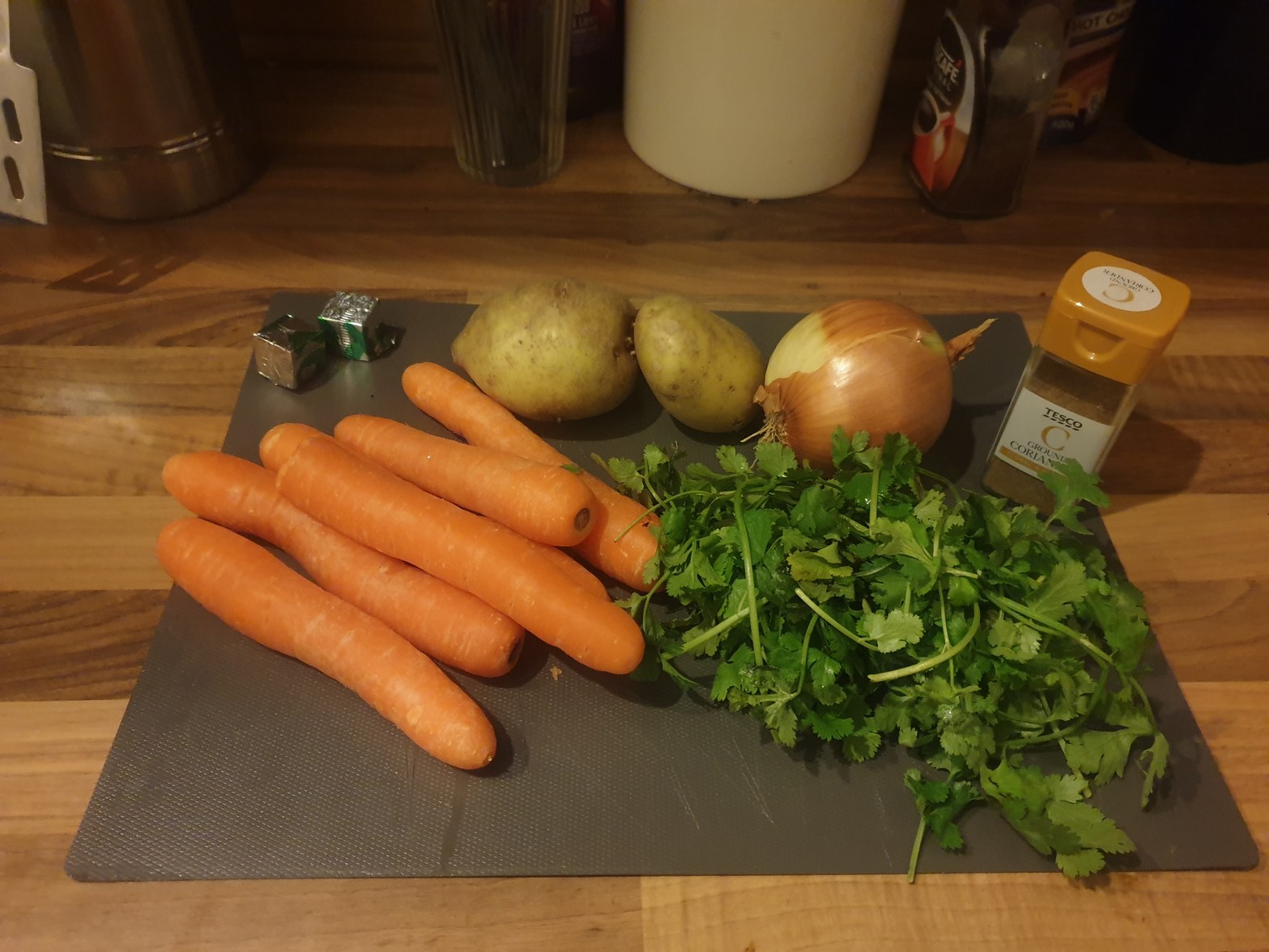
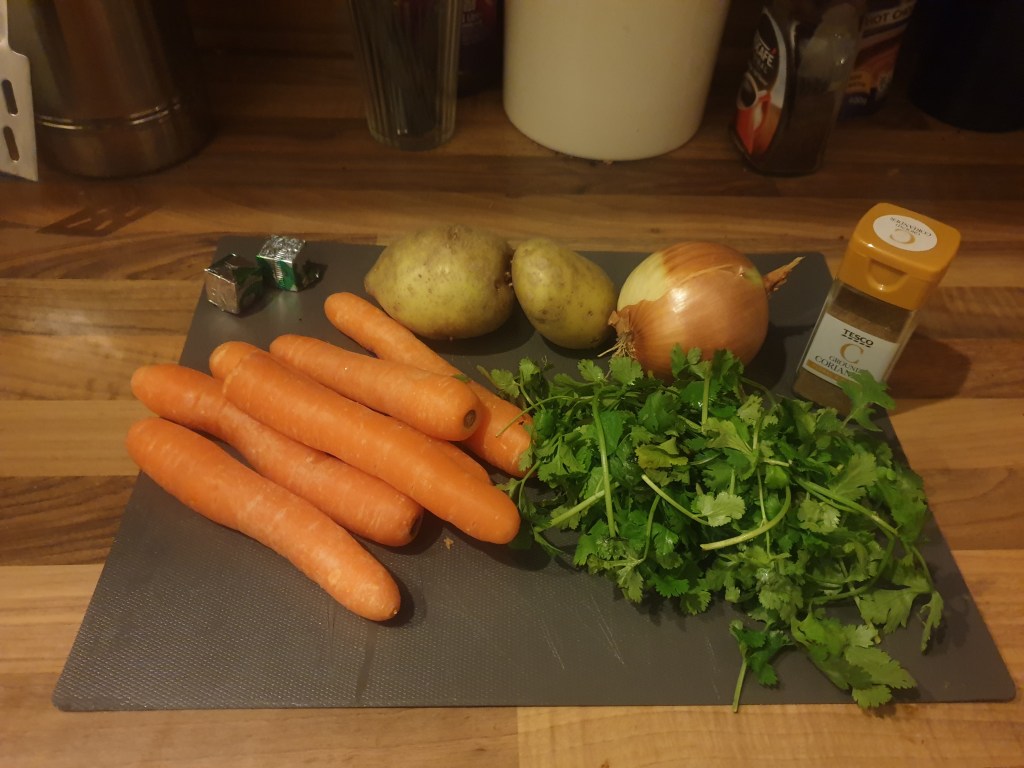
Our ingredients.

Love is in the air, is that coriander I smell?

Today’s post is another recipe, this time for carrot & coriander soup. Carrots were a common root vegetable which was eaten by almost everyone in the Middle Ages. They are easy to grow, easy to store and wonderfully versatile!

Coriander is an ancient herb with roots (hehe) in Greek medicine, treasured within Egyptian tombs and a late bronze age British preservative. Coriander clearly has many uses, the one which is most relevant this Valentine’s Day is its use as an aphrodisiac.

Ground coriander was added to ‘love potions’ in the medieval and renaissance eras. Whether it was successful or not I unfortunately do not know. However, a man named Robert Turner is credited for saying coriander “stimulates the animal passions.” when drank with wine in the book Herbal Simples Approved For Modern Uses of Cure.

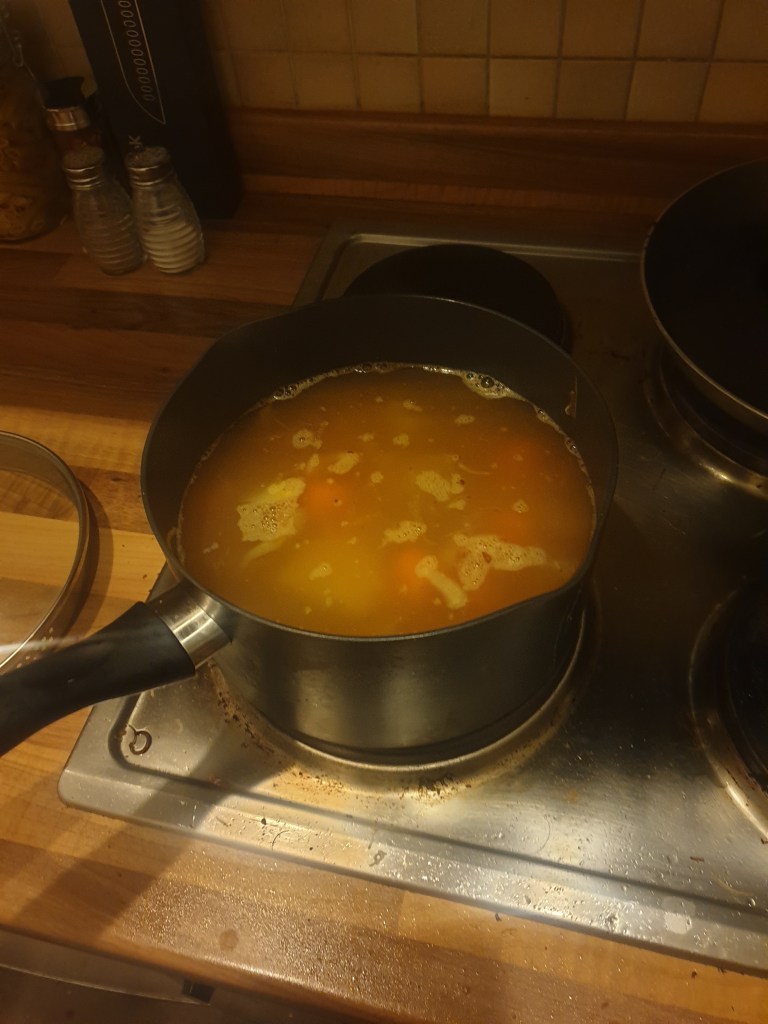
Pardon the gross stove top.

The Ingredients

  • 5 good sized carrots, peeled and chopped
  • 1 medium or 2 small potatoes, peeled and chopped
  • 1 medium brown onion, finely chopped
  • 1 handful of fresh coriander, chopped or crushed in a mortar and pestle
  • 1tsp of ground dried coriander
  • 1tbsp of cooking oil
  • Enough vegetable stock to cover the ingredients

The Method

  1. Add the oil to a large pan and cook the onion for 5 minutes until they are softened
  2. Stir in the ground coriander and the potato, coat the potato in the spice
  3. Add in the carrots and then the stock, bring it to boiling and then reduce to a simmer
  4. Allow it to simmer for 20 minutes, then add the chopped fresh coriander and stir.
  5. Ready to serve!

If you are looking for a smoother soup, feel free to use a hand blender to smush everything up, or if you are feeling authentic, crush the pieces of carrot against the wall of the pan with the back of your spoon.

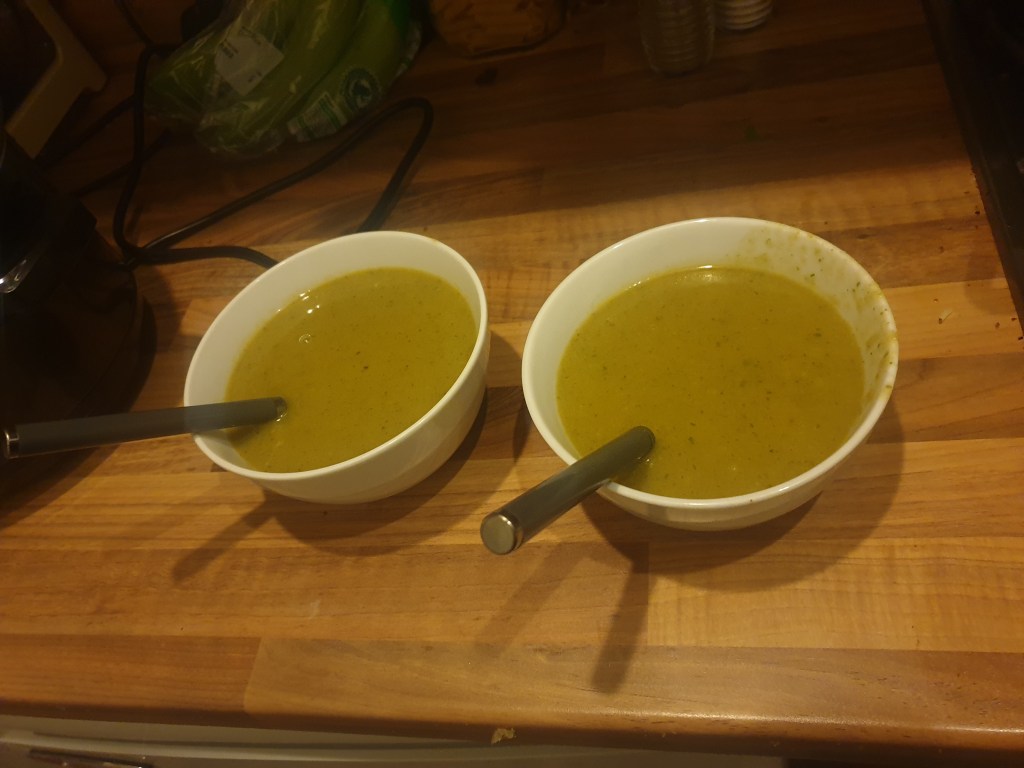
Our soup turned out much greener than it should as I added WAY too much fresh coriander, the recipe above has been adjusted to make sure you get a nice orange colour.

Happy Valentine’s!

Spices of the Middle Ages – Medieval Cooking

Spices and seasonings are a normal part of our everyday lives. Sugar, salt and pepper are likely always in your kitchen. But has this always been the case? You may be surprised.

It is a well known fact that nobles enjoyed a wide variety of spices and flavourings. For example, saffron has always been more expensive than gold. This can be attributed to the crusades of the 11th century. Many of the exotic spices used by the upper class originated in eastern lands which crusaders travelled through on their way to Jerusalem.

This included spices such as;

  • Cinnamon
  • Safron
  • Ginger
  • Coriander
  • Cumin
  • And many more!

These spices were often kept in ‘spice chests’. Locked strongboxes made of wood and metal. This gives an idea of just how valuable these commodities were.

As well as making great gifts, spices were used in a myriad of medicines. For example, cloves were used in medieval europe as a remedy for toothache!

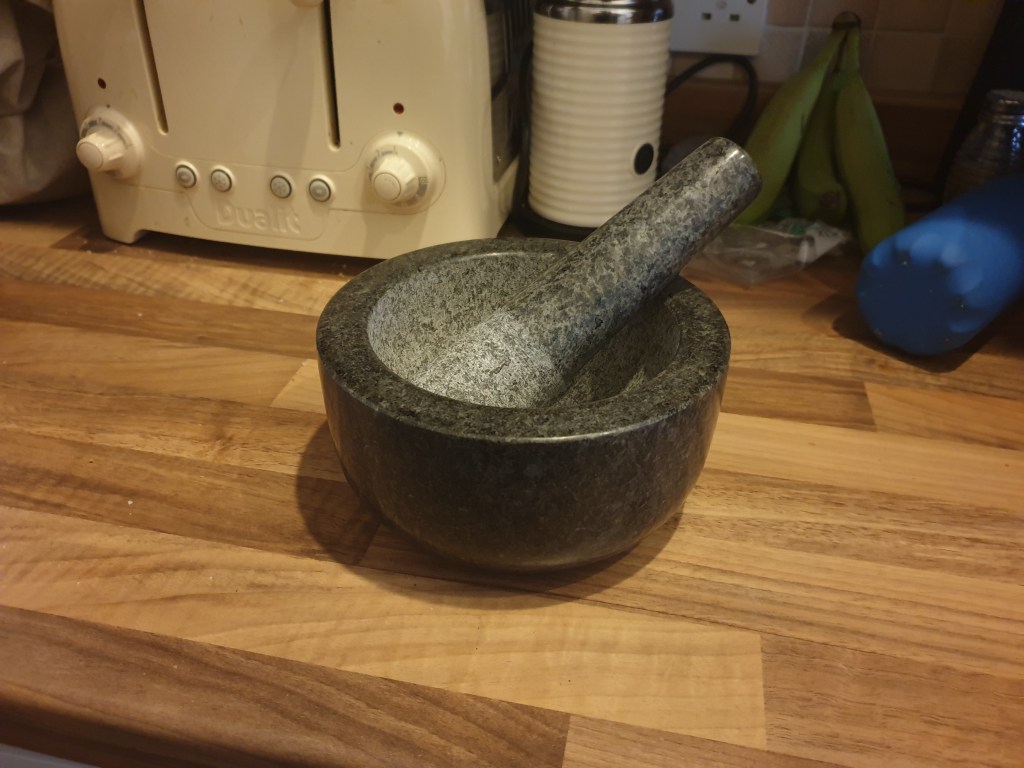
This is all very interesting, but how does this help you? Well, it doesn’t really but don’t click away! Do you own a mortar & pestle? If not, maybe you should invest.

The mortar and pestle is a staple of any medieval kitchen, and are still very useful today.

Fresh herbs such as rosemary and basil are packed full of oils and flavour, this simple device can work wonders in extracting these flavours. This would be a wonderful way to make your own pesto for example, the possibilities are endless.

If you are the kind of chef who uses fresh herbs and spices, get yourself one of these and go medieval on those ingredients.

Tomato Sauce – Modern Day Peasant

As a student, my budget is very limited. This sometimes leads to having to skimp out on food and buy premade sauces. While this is not at all a bad thing, as an ametuer chef I feel it is my duty to at least try and make things myself.

This recipe provides a simple, easy and quick tomato sauce which will add a deep flavour to any of your tomato based dishes.

It goes great with pasta, you could use this as the base for a tomato soup, chilli, pizza, ratatouille, casseroles…you get the idea. I used this sauce for meatballs.

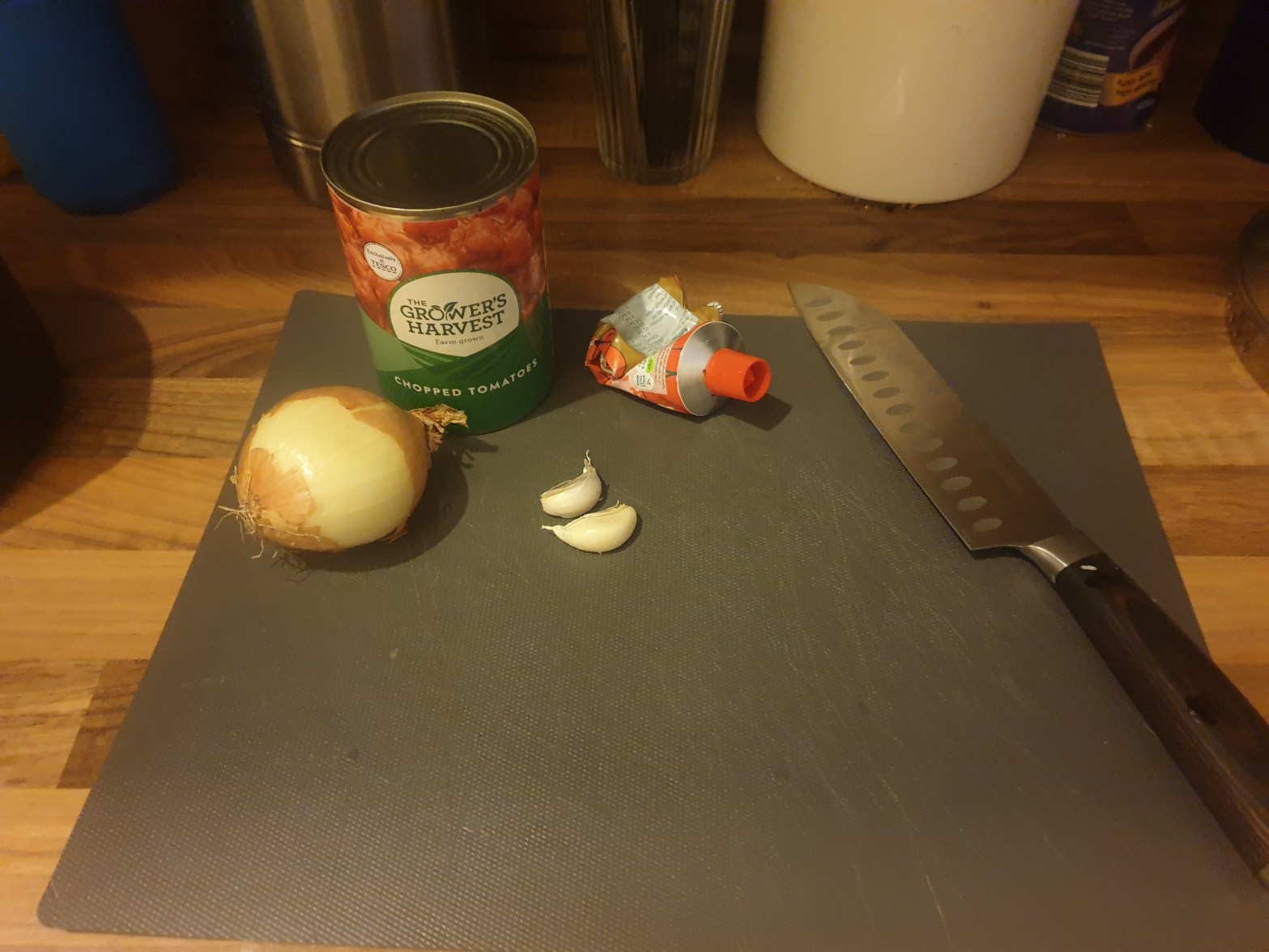
The main ingredients.

The Ingredients

  • 1 can of chopped/crushed tomatoes, whole is fine but you will have to crush them yourself
  • Tomato paste
  • 2 cloves of garlic, finely chopped or minced
  • 1 medium brown onion, finely chopped
  • Salt & pepper to taste
  • 3tbsp of your cooking oil of choice
  • 3tbsp of unsalted butter
  • Dried basil (optional)

The Method

  1. Heat up the oil in a saucepan on a medium heat. Add the garlic and allow to cook for 1 minute.
  2. Add the onion and cook until they begin to brown.
  3. Add some tomato paste, two or three squeezes of it. Then stir to coat the onion and garlic.
  4. Add in your chopped tomatoes, stir and allow to simmer for at least 30 minutes. The longer it simmers the thicker it will be, I wouldn’t go over an hour however as it may reduce too much.
  5. Add the butter and any herbs you desire. Stir to combine.
  6. Once the butter has melted into the sauce, you are ready to serve!
The sauce before simmering.

You could also use a hand blender to create more of a purée, perfect for pizza!

Have you given this recipe a try? Tweet a pic: https://twitter.com/ThePlumpPeasant

Chicken Stock – Medieval Cooking

In our modern world, food waste is terrifying. In developed countries such as the U.K, half of all food waste comes from the home. This was simply unthinkable in the medieval era.

Preserving food was much more limited then also. One could salt or smoke meat and fish to prolong its life. Pickling vegetables was also an option. However, refrigeration was impossible.

This meant that food would have to be used fairly quickly, especially meat. Especially chicken. Eating chicken was rare for a medieval peasant, as any female chickens were prized for laying eggs!

On the off-chance a chicken has been eaten, the carcass would have been used to create a chicken stock. The basis of many hearty pottages or soups! As with our beef pottage, this recipe will use a slow cooker.

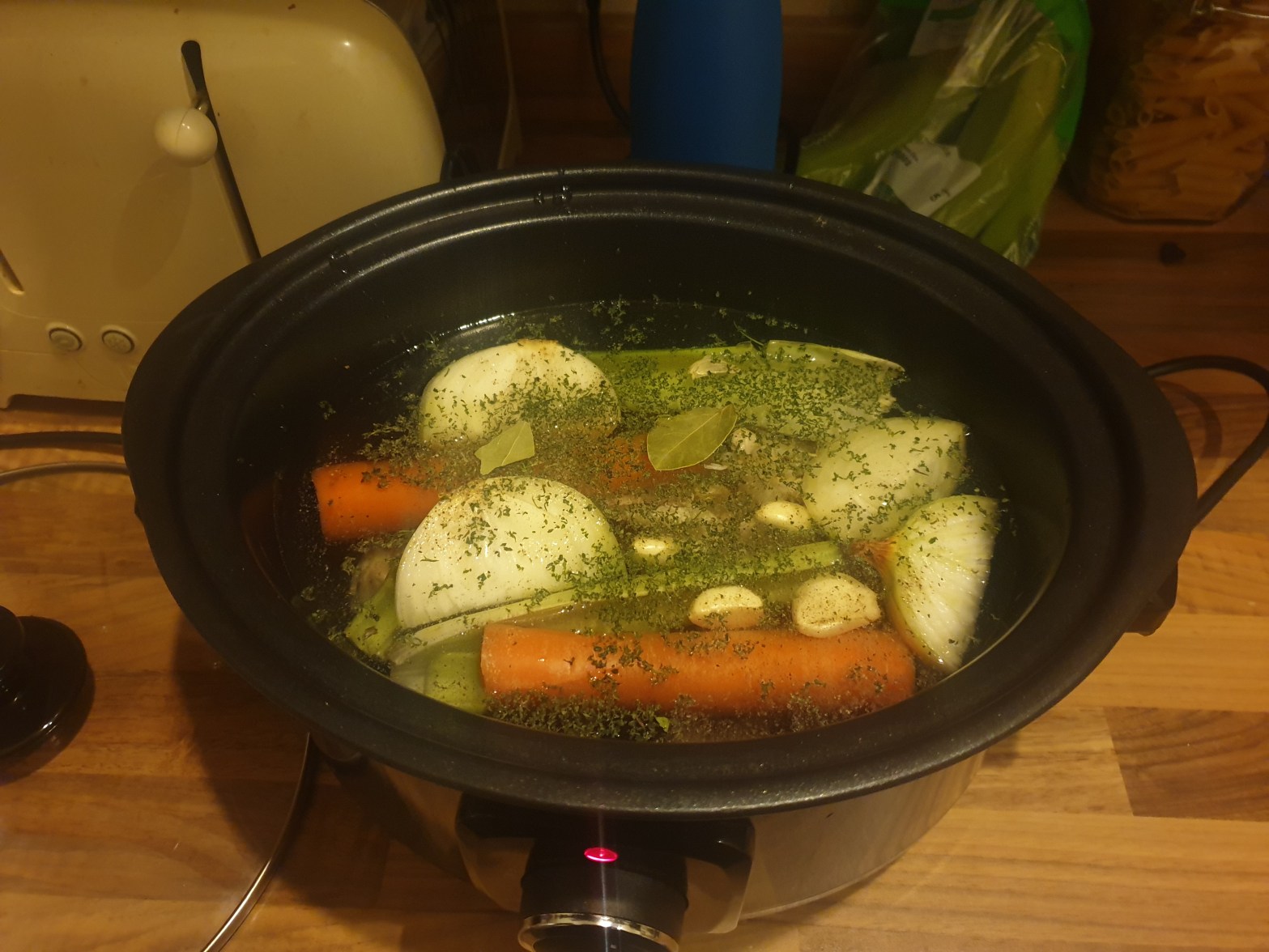
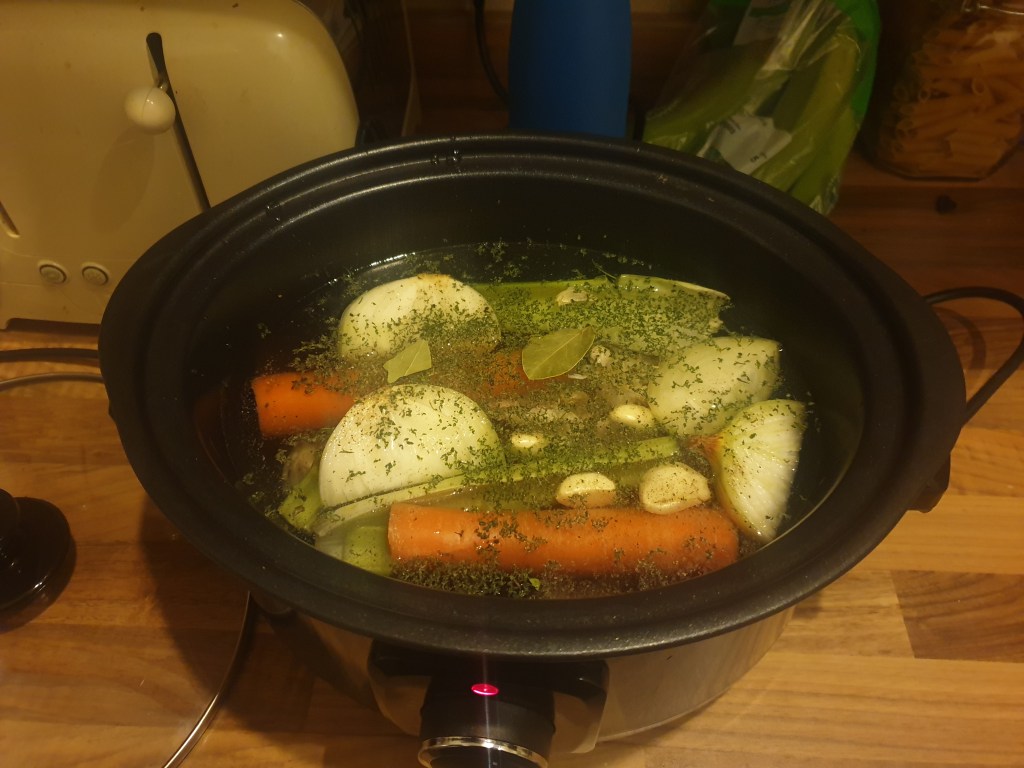
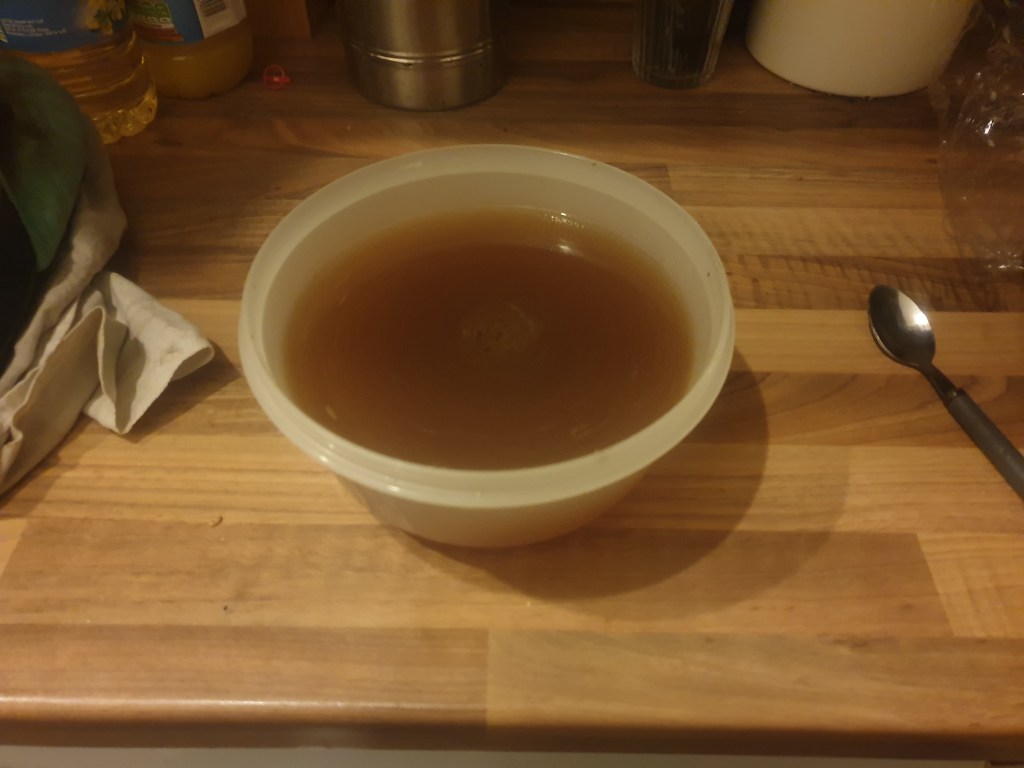
Ready to go!

The Ingredients

  • Leftover cooked chicken carcass, bones snapped to expose all that marrow
  • 1 peeled white onion, cut into quarters
  • 2 carrots, ends trimmed
  • 2 celery sticks, cut in half
  • 4 cloves of garlic, peeled and smashed open
  • 2 dried bay leaves
  • 1 teaspoon of dried parsley
  • 1 teaspoon of dried rosemary
  • 1/2 tablespoon black peppercorns
  • Enough water to cover the ingredients

The Method

  1. Set-up your slow cooker as per its instructions, set it to low
  2. Snap the bones of your chicken carcass and add it to the slow cooker
  3. Add in the remaining ingredients, including the water
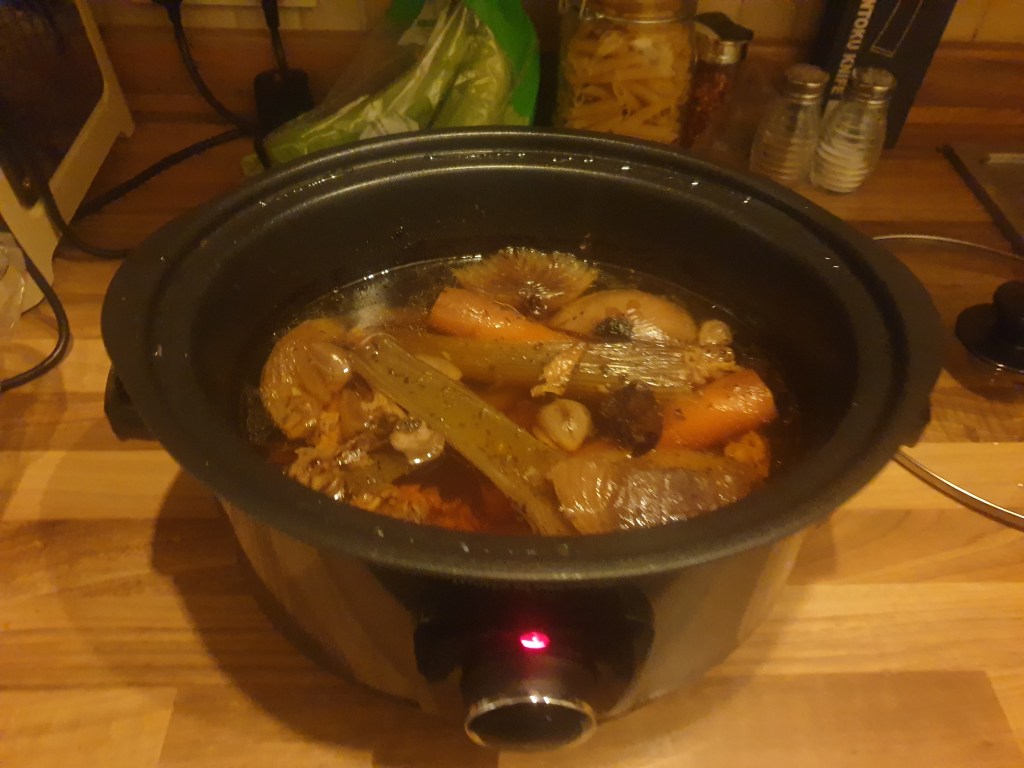
  4. Allow to cook on low for either 12, or 24 hours (I prefer 24)
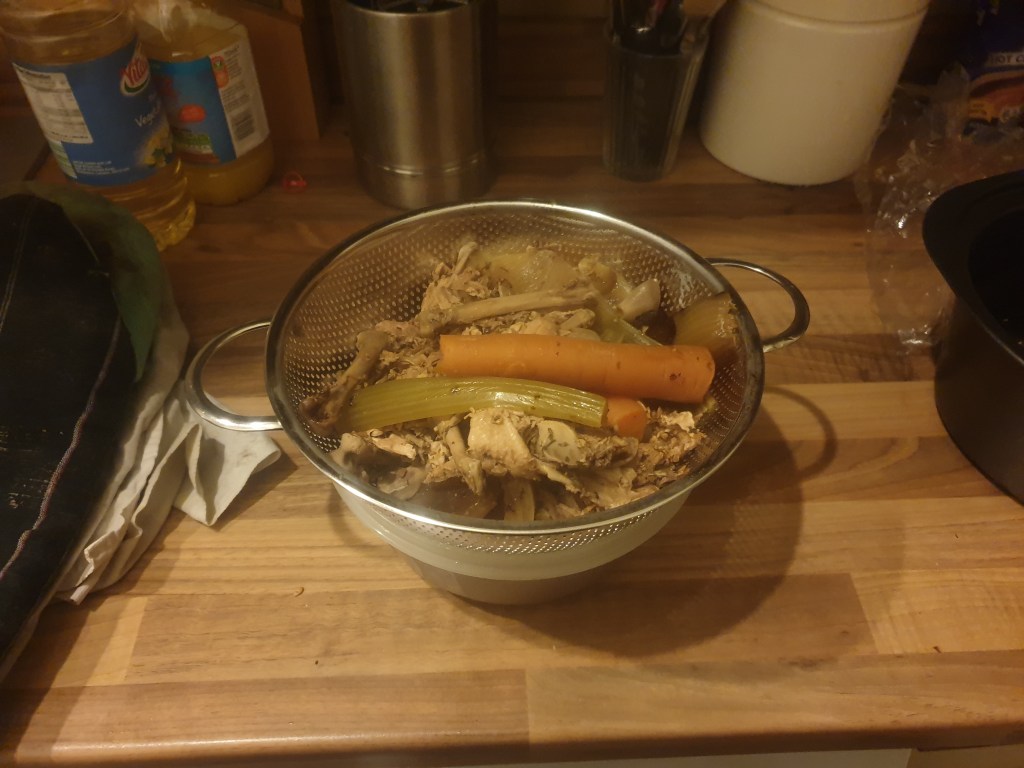
  5. Strain and drain that stock!
  6. Allow the stock to cool before then storing it in the fridge, or freezer. The stock can be stored in the fridge for about 5 days, or frozen for up to a year.

So there you have it, a delicious and hearty chicken stock made from your leftovers.

Want to learn more about reducing waste? https://www.lovefoodhatewaste.com/ is a great resource.

Trenchers – Medieval Bread

Grains, water and yeast. The three cornerstones of life, and the main ingredients used when making bread.

Yeast is a more modern addition to this tried and tested formula. Of course by modern, I mean the ancient Egyptians of around 400 B.C. The breads made before this time (as far back as 8000 B.C.) did not have any leavening agents added and so took the form of the recognisable Indian naan or Central American tortilla.

The way that grains have been treated throughout time has changed quite a lot. The grinding of grains produces the refined flour with which bread is baked. Early flour was course and what we would describe today as ‘grainy’. This produces a darker, more rustic loaf.

Ironically today, these loaves are more desirable and more expensive to obtain thanks to factory processing and mass production of sliced white bread.

White bread was held in a much higher regard in terms of social standing in many cultures of the past. In Medieval Europe, lords and kings would boast of how white their loaves were. This is due to the extra processing and time it took to create a fine white flour.

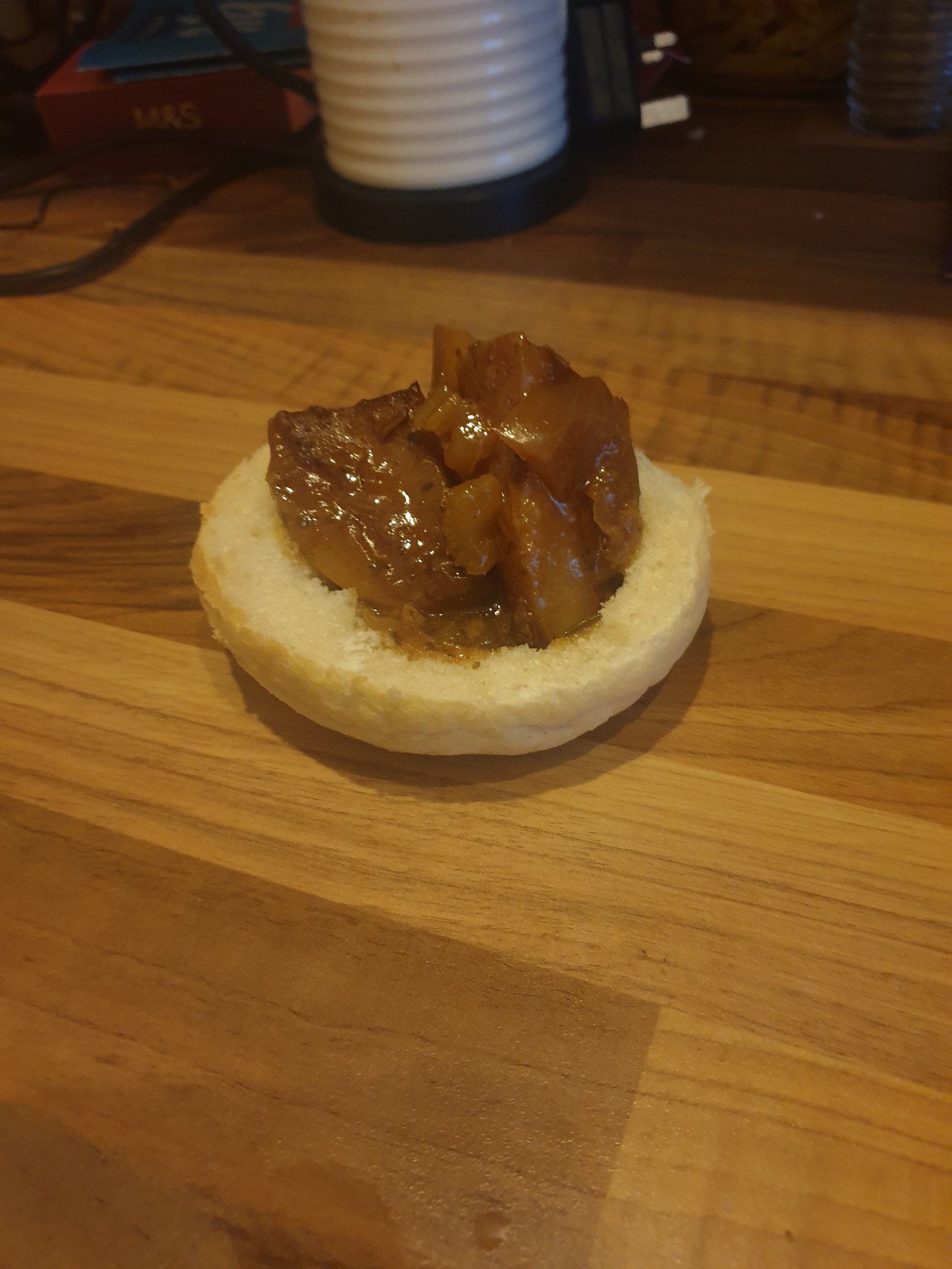
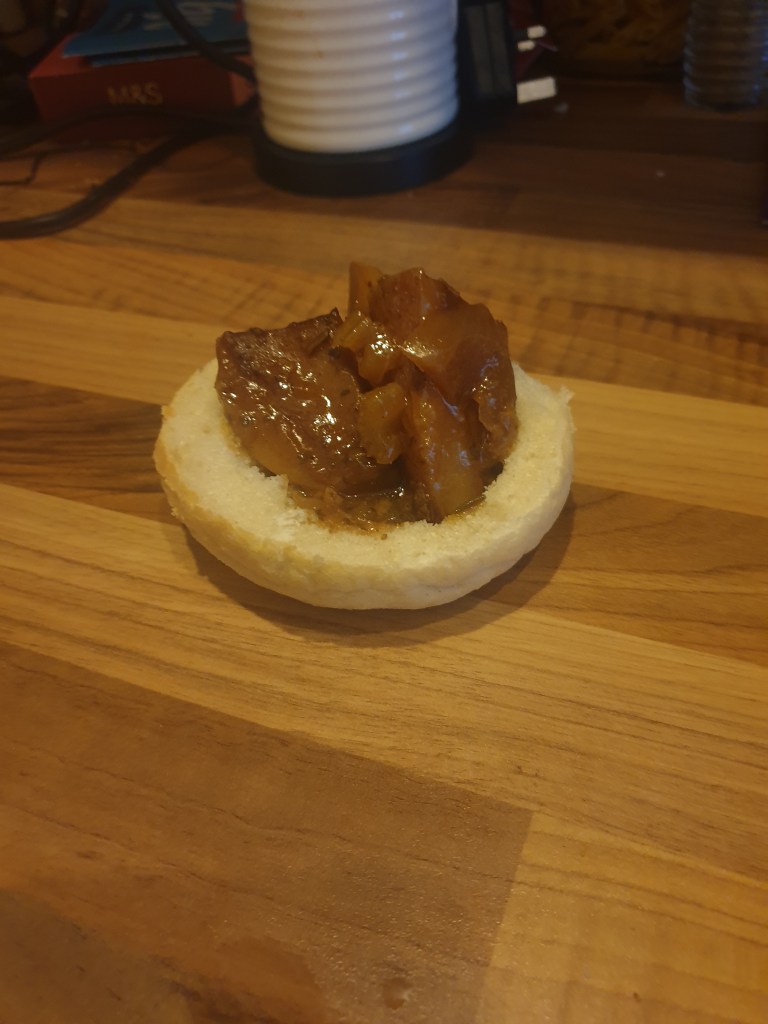
Beef pottage, served on a trencher.

You may remember our beef pottage recipe earlier in the week and likely thought: wait? no bread? Well honestly, I just didn’t have any bread in the house. But the next day I found some lovely fresh baked little white bread rolls that served as great trenchers for the leftover pottage.

“Trenchers?” I hear you ask, are what was used by peasants and some of the middle/upper class as plates! The food would be placed upon a flat round of bread and then eaten at the end of the meal once it had absorbed the sauce from the meal.

In the case of pottage, a round loaf could be hollowed at and turned into a bowl, and the top of the bread could be used to scoop up the pottage. And of course don’t throw anything away! The soft bread from inside the round loaf could be kept and ground into breadcrumbs. Even the nobles weren’t wasteful with their used bread, as any leftovers were given to the poor.

Beef and Vegetable Pottage – Medieval Meal

Whether you were rich or poor, lord or peasant, you almost certainly ate pottage.

Pottage is a dish which we now know as soup, stew or broth. Basically any kind of combination of ingredients thrown together into a nice big pot full of water and cooked for a long time.

These ingredients were typically based on whatever was easily available to the cook. Vegetables, grains, meat, fish and herbs. Although adding meat to your pottage was a sign of wealth. Peasants enjoyed pottages packed full of veggies and bran.

Pottage was often left over the fire for days at a time. The ingredients would vary, being switched out often as servings were taken and eaten from the pot.

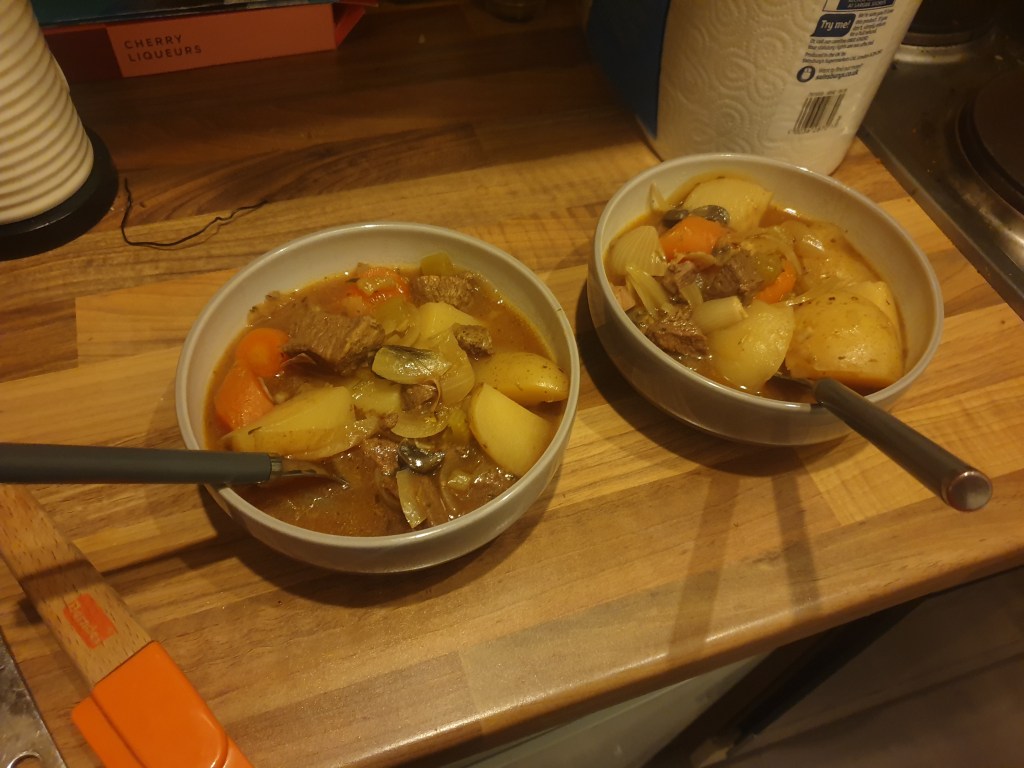
Pottage, served and prepared in a modern style.

When I decided to make a pottage of my own, it unfortunately required a fair bit of compromise. I couldn’t leave my pottage cooking over a open fire for days in the centre of the living room. I’m sure that would lead to some kind of tenancy disagreement.

I opted to use a slow-cooker, a modern interpretation of the pot over a fire setup. I also allowed the use of beef in our pottage as in this modern era, meat is thankfully fairly priced.

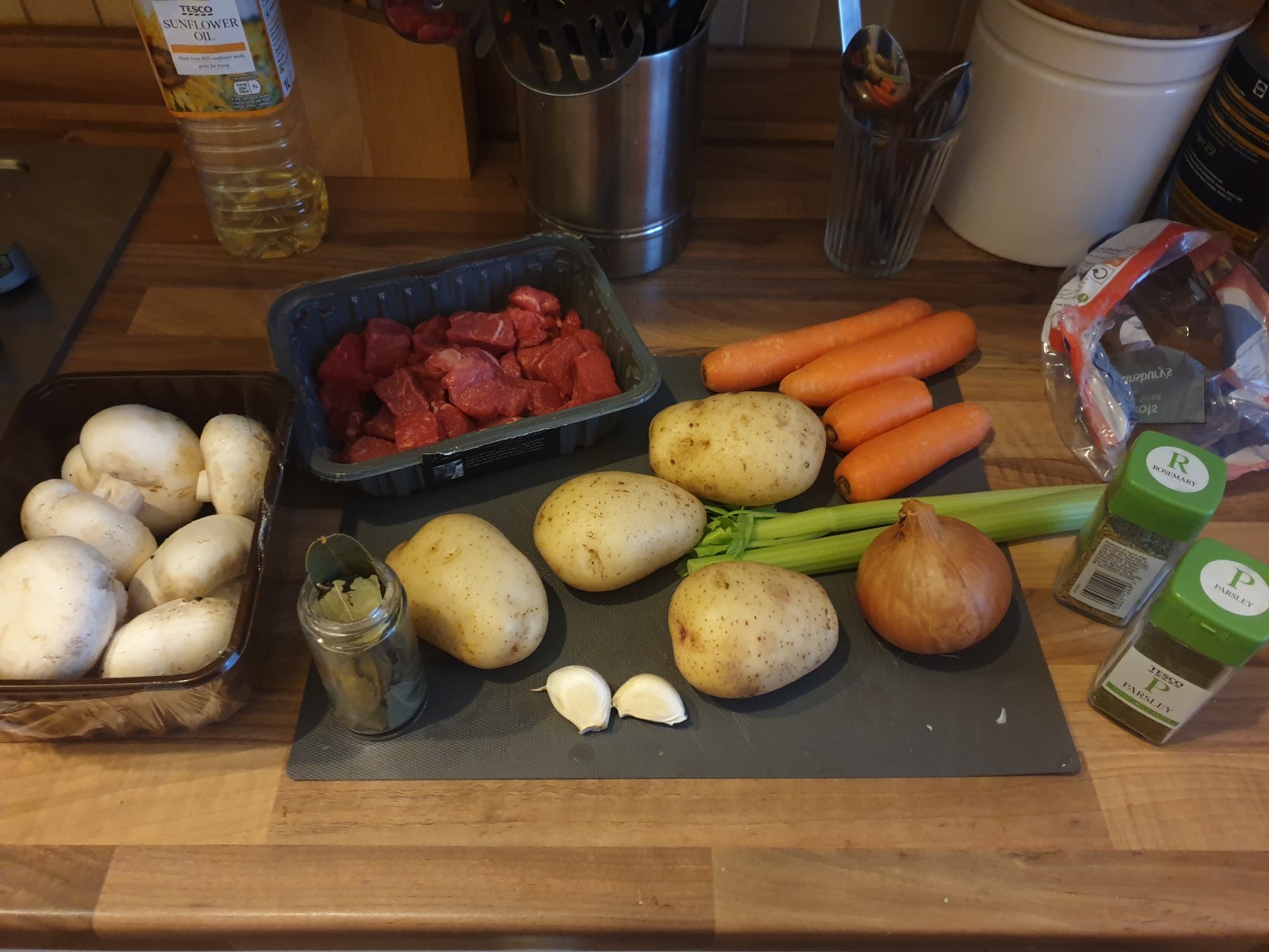
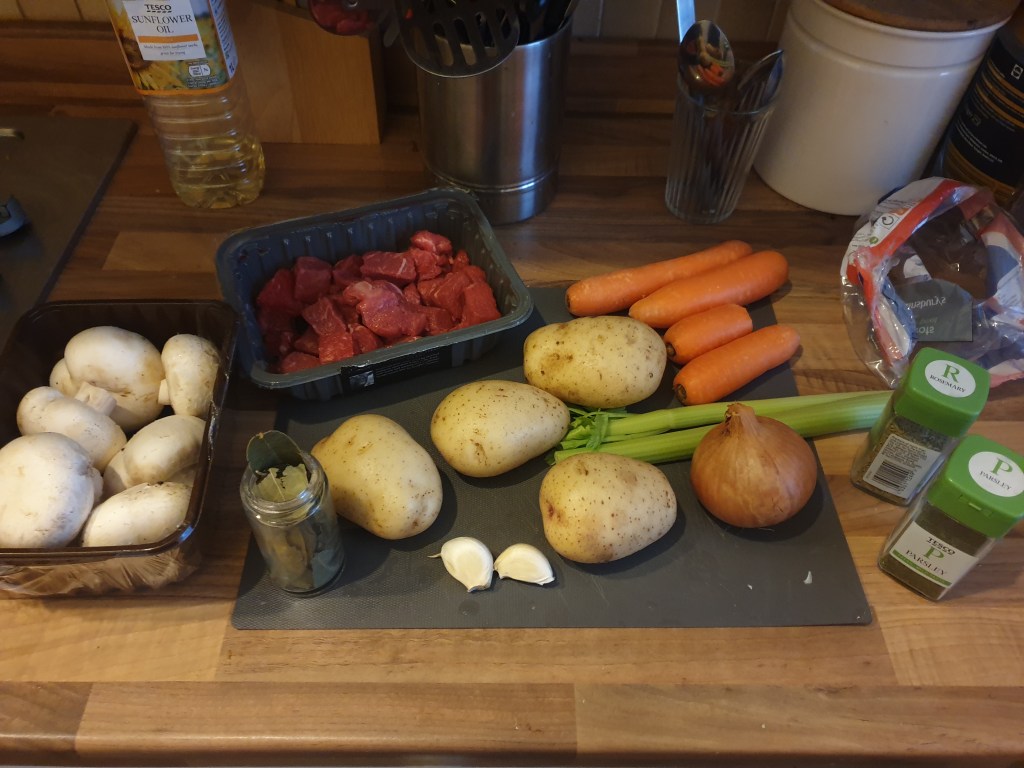
Our ingredients.

The Ingredients

  • Somewhere between 400g and 900g of diced beef
  • 2 tablespoons of oil for frying, or some lard/butter
  • 4 reasonably sized potatoes, scrubbed and quartered with the skin still on
  • 4 carrots, scrubbed and sliced diagonally into chunks with the skin still on
  • 6 of your preferred mushrooms, use wild ones for accuracy, chestnut for a meatier flavour (especially if you are making this a vegetarian meal) or closed-cap if you are a modern peasant like me
  • 2 celery sticks, finely chopped
  • 1 peeled, chopped white onion
  • 2 cloves of garlic, minced or chopped
  • 1 teaspoon of dried parsley
  • 1 teaspoon of dried rosemary
  • 2 bay leaves
  • Enough vegetable or beef stock to mostly cover your ingredients
  • A splash of tomato paste (optional)

The Method

  1. Begin by browning your beef in a frying pan in your fat of choice. You may have to do this in batches depending on your pan size and amount of beef. Once browned, set aside on a rack or absorbant material to rest and drain.
  2. Lower the heat and fry your garlic in the same pan (do not clean the pan! But add more fat if needed) as your beef rests. Once the garlic becomes fragrant after a minute or so, add the onion and fry for an additional 5 minutes or until soft and slightly coloured. The moisture from the onion will stop the garlic from burning.
  3. Once the garlic and onion is cooked, begin preparing your stock. Whether it be homemade stock or stock from powder, prepare it on the stove in a pot. Add the garlic and onion to the stock once it has finished. Be sure to stir well.
  4. Add the prepared vegetables into the slow-cooker. Then add the beef. Then the stock mixed with the garlic and onion. Once everything is in the pot, give it a good stir.
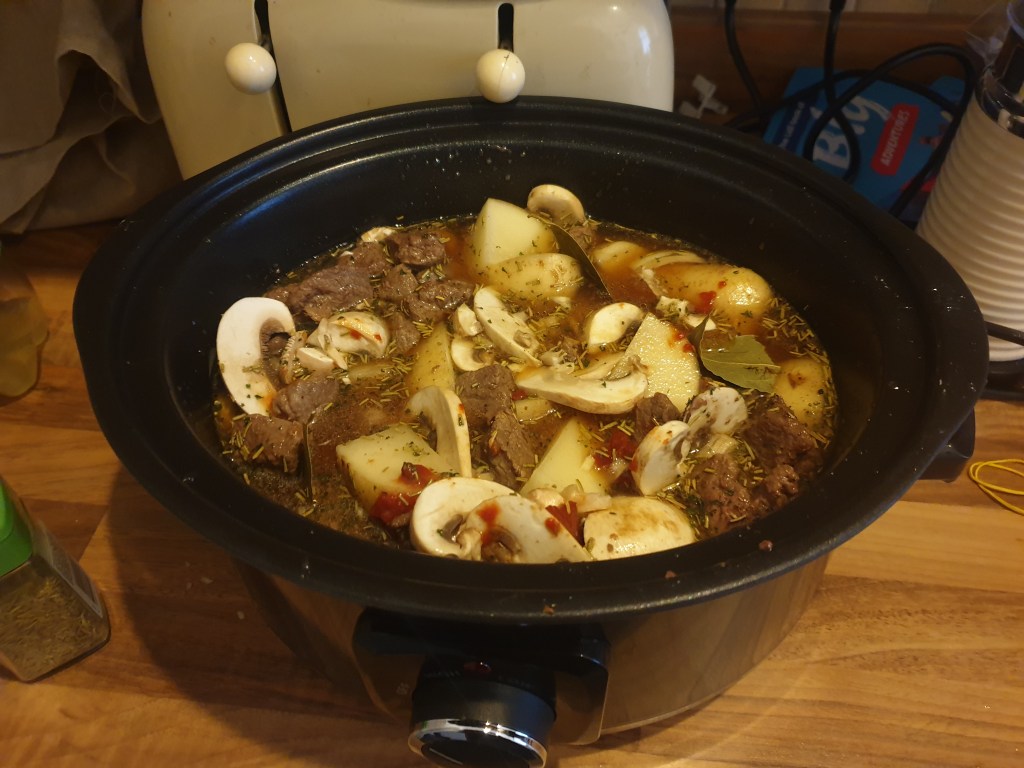
  5. Finally, add the herbs, bay leaves and tomato paste (if using it). Then set the slow-cooker to low for 7-8 hours. Or, high for 4-6 hours.
Ready to go!

Side note: your kitchen WILL smell amazing whilst this is cooking.

We ate our pottage our of ceramic bowls, a true sign of wealth and luxury. The peasant folk would have enjoyed their pottage in a partially hollowed out piece of bread known as a trencher. One of the best things about this recipe is that you can reheat it and eat more the next day, which makes the flavours even deeper. And will also give you an opportunity to go out and buy some bread!

Design a site like this with WordPress.com
Get started