

Whether you were rich or poor, lord or peasant, you almost certainly ate pottage.
Pottage is a dish which we now know as soup, stew or broth. Basically any kind of combination of ingredients thrown together into a nice big pot full of water and cooked for a long time.
These ingredients were typically based on whatever was easily available to the cook. Vegetables, grains, meat, fish and herbs. Although adding meat to your pottage was a sign of wealth. Peasants enjoyed pottages packed full of veggies and bran.
Pottage was often left over the fire for days at a time. The ingredients would vary, being switched out often as servings were taken and eaten from the pot.
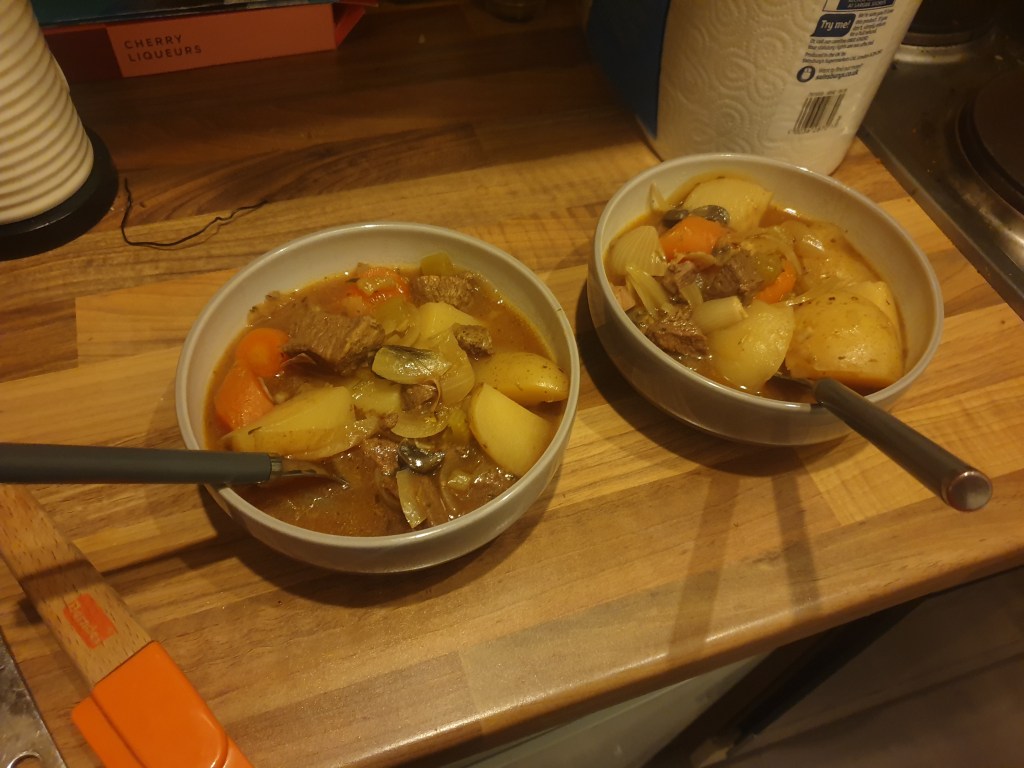
When I decided to make a pottage of my own, it unfortunately required a fair bit of compromise. I couldn’t leave my pottage cooking over a open fire for days in the centre of the living room. I’m sure that would lead to some kind of tenancy disagreement.
I opted to use a slow-cooker, a modern interpretation of the pot over a fire setup. I also allowed the use of beef in our pottage as in this modern era, meat is thankfully fairly priced.
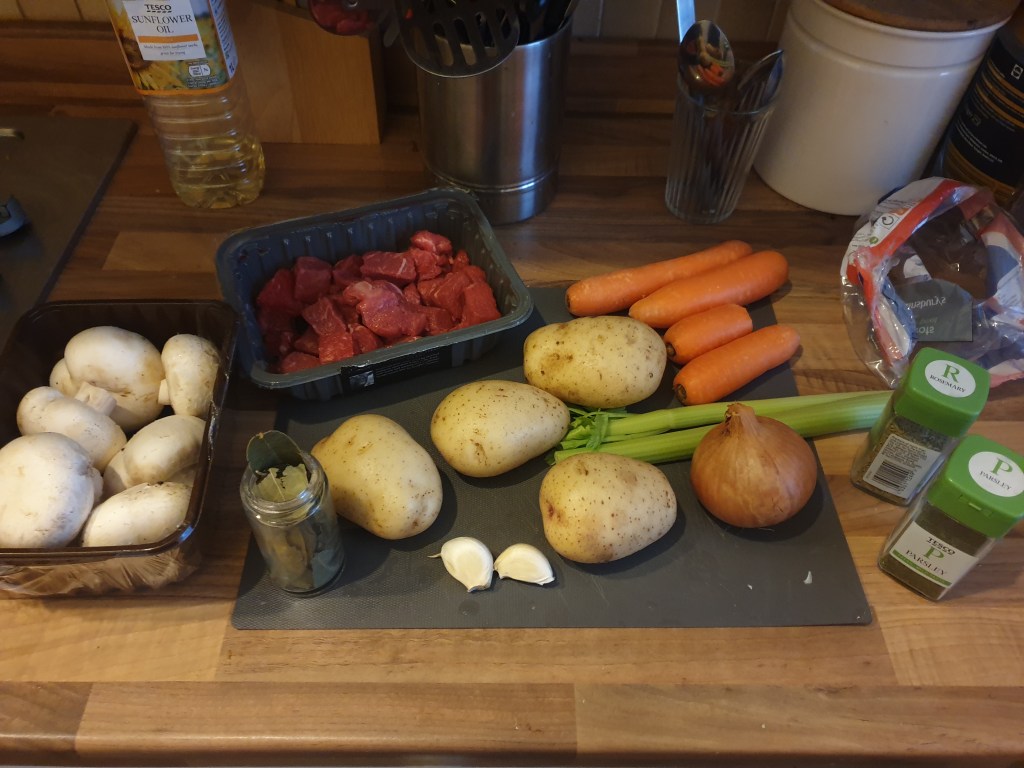
The Ingredients
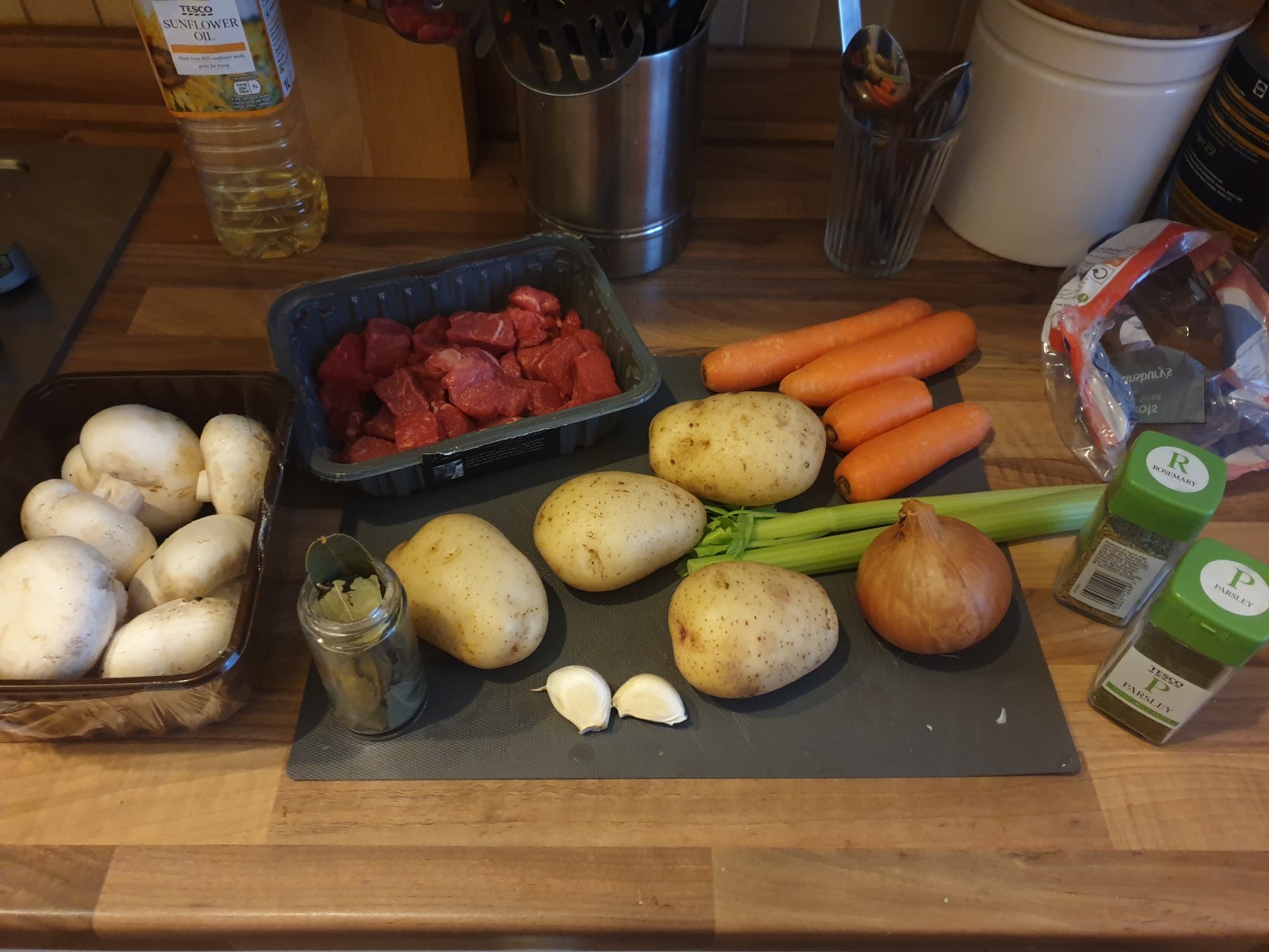
- Somewhere between 400g and 900g of diced beef
- 2 tablespoons of oil for frying, or some lard/butter
- 4 reasonably sized potatoes, scrubbed and quartered with the skin still on
- 4 carrots, scrubbed and sliced diagonally into chunks with the skin still on
- 6 of your preferred mushrooms, use wild ones for accuracy, chestnut for a meatier flavour (especially if you are making this a vegetarian meal) or closed-cap if you are a modern peasant like me
- 2 celery sticks, finely chopped
- 1 peeled, chopped white onion
- 2 cloves of garlic, minced or chopped
- 1 teaspoon of dried parsley
- 1 teaspoon of dried rosemary
- 2 bay leaves
- Enough vegetable or beef stock to mostly cover your ingredients
- A splash of tomato paste (optional)
The Method
- Begin by browning your beef in a frying pan in your fat of choice. You may have to do this in batches depending on your pan size and amount of beef. Once browned, set aside on a rack or absorbant material to rest and drain.
- Lower the heat and fry your garlic in the same pan (do not clean the pan! But add more fat if needed) as your beef rests. Once the garlic becomes fragrant after a minute or so, add the onion and fry for an additional 5 minutes or until soft and slightly coloured. The moisture from the onion will stop the garlic from burning.
- Once the garlic and onion is cooked, begin preparing your stock. Whether it be homemade stock or stock from powder, prepare it on the stove in a pot. Add the garlic and onion to the stock once it has finished. Be sure to stir well.
- Add the prepared vegetables into the slow-cooker. Then add the beef. Then the stock mixed with the garlic and onion. Once everything is in the pot, give it a good stir.
- Finally, add the herbs, bay leaves and tomato paste (if using it). Then set the slow-cooker to low for 7-8 hours. Or, high for 4-6 hours.
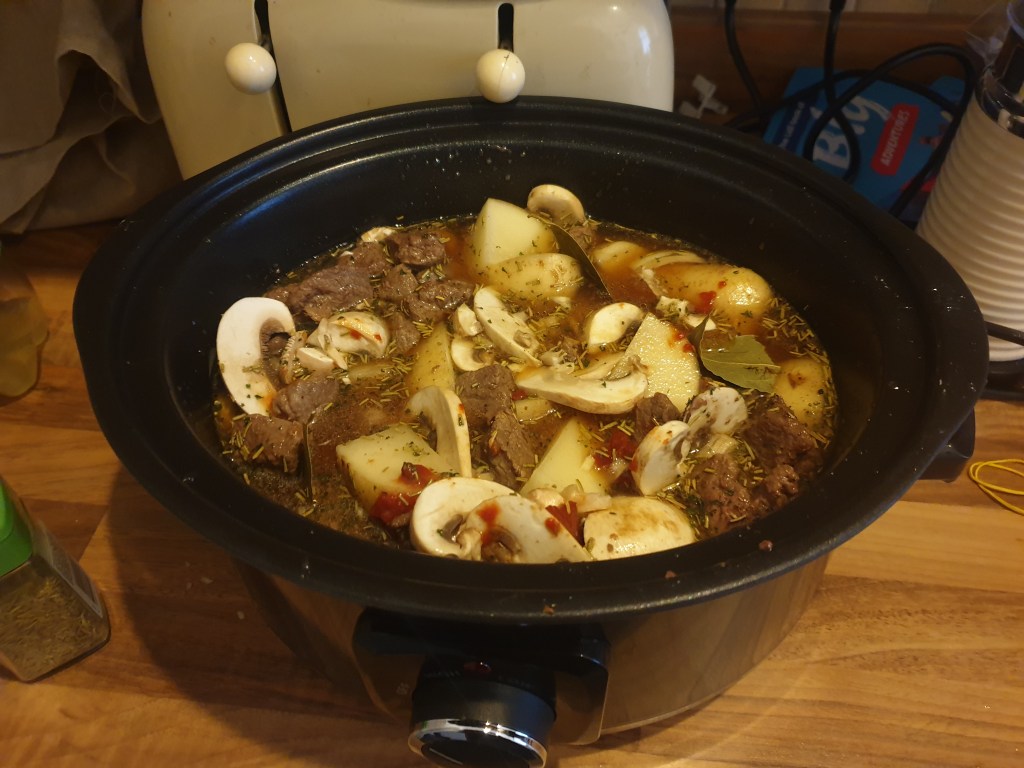
Side note: your kitchen WILL smell amazing whilst this is cooking.
We ate our pottage our of ceramic bowls, a true sign of wealth and luxury. The peasant folk would have enjoyed their pottage in a partially hollowed out piece of bread known as a trencher. One of the best things about this recipe is that you can reheat it and eat more the next day, which makes the flavours even deeper. And will also give you an opportunity to go out and buy some bread!
 The Plump Peasant
I really enjoy the idea of just chucking in your leftovers of the week and letting it cook for a long amount of time. We all know the pain of having leftovers and not knowing what to do with it.
LikeLiked by 1 person
Really enjoyed this, funny and informing, and i had no idea closed cap mushrooms were a staple of the modern peasant haha!
Can’t wait to read more. 🙂
LikeLiked by 1 person